
Placer
Inspection the pioneers who laid out the state-of-the-art and fully transparent
methods of advancing product manufacturing through innovation in the most
complex, developing and advancing field of Electronic, Biotechnology and
Pharmaceutical have been extremely sharp and rigid while bringing out their Process Validation Placer County tasks
in order to streamline the product manufacturability and enhance process
development.
Process
validation is one of the most crucial aspects of an organization’s quality
assurance procedures especially the healthcare sector which is directly related
to the life and welfare of the people. You can channelize the flow of the
process validation at the various stages of the product lifecycle in order to
verify and track whether the variegated processes you are carrying out are
efficiently and effectively meeting the quality standards of your finished
products.
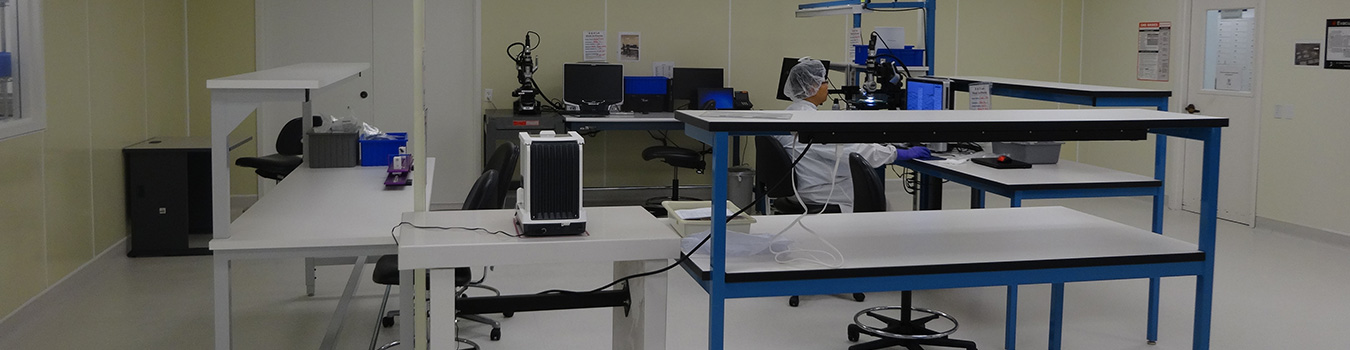
On the basis of
the stage at which your process validation is currently been performing in the
product life cycle, it can be characterized into the following types.
- Prospective validation
- Concurrent validation
- Retrospective validation
- Revalidation
The
highly-experienced and the committed professionals of the Placer Inspection,
who are the leading contract manufacturers of the of minimally invasive medical
devices and electronic hardware effectively put in place the various quality
measures from the Product Realization, Concept, Design Input, Design Output,
Design Verification/Validation, Processimprovement California Clinical Studies, Product Transfer, Product Launch
and Regulatory Readiness.
Today expanding
the boundaries of Process Validation and Process
qualification Yolo County a bit, here they have grounded a blog detailing
about the various types of Pharmaceutical Process Validation.
Let’s Start!
Prospective validation
- The prospective validation is performed during the pre-production stage, i.e. when the product is still at the development stage.
- Careful and critical examination of the production process is performed by dividing the whole process into different steps.
- Each step is then individually analyzed and evaluated. Seeing the track record, it is then that the chances of each step leading to a critical situation are accounted.
Concurrent validation
- The concurrent validation can only be carried out once the product is finally in the tangible state and you can access it physically.
- It is important that you importunately examine and monitor the few batches or the sample of the product produced on a production scale as minutely as possible.
- Concurrent validation will only be carried out effectively if there has been a clear success at the development stage with respect to understanding the fundamentals of the process.
- Combining the findings of this step with the comprehensive trend analysis can assist you in performing the concurrent validation throughout the life of a product.
Retrospective validation
- Taking into account the constants such as the composition, procedures, and equipment, Retrospective validation takes into account the past experiences or the historical data of the production process.
- Based on the insights received on examining the past experiences, the final control tests are then evaluated.
- You can also incorporate trend analysis into the mix in order to determine how well the process parameters are in compliance with the permissible range.
- You cannot take retrospective validation as the part of the quality assurance since it is only put into use at certain circumstances.
Revalidation
Revalidation is
the type of process validation that makes sure that the varied alterations made
to the production process or its environment has put any negative effects on
the quality of the product and the different process characteristics.

No comments:
Post a Comment